
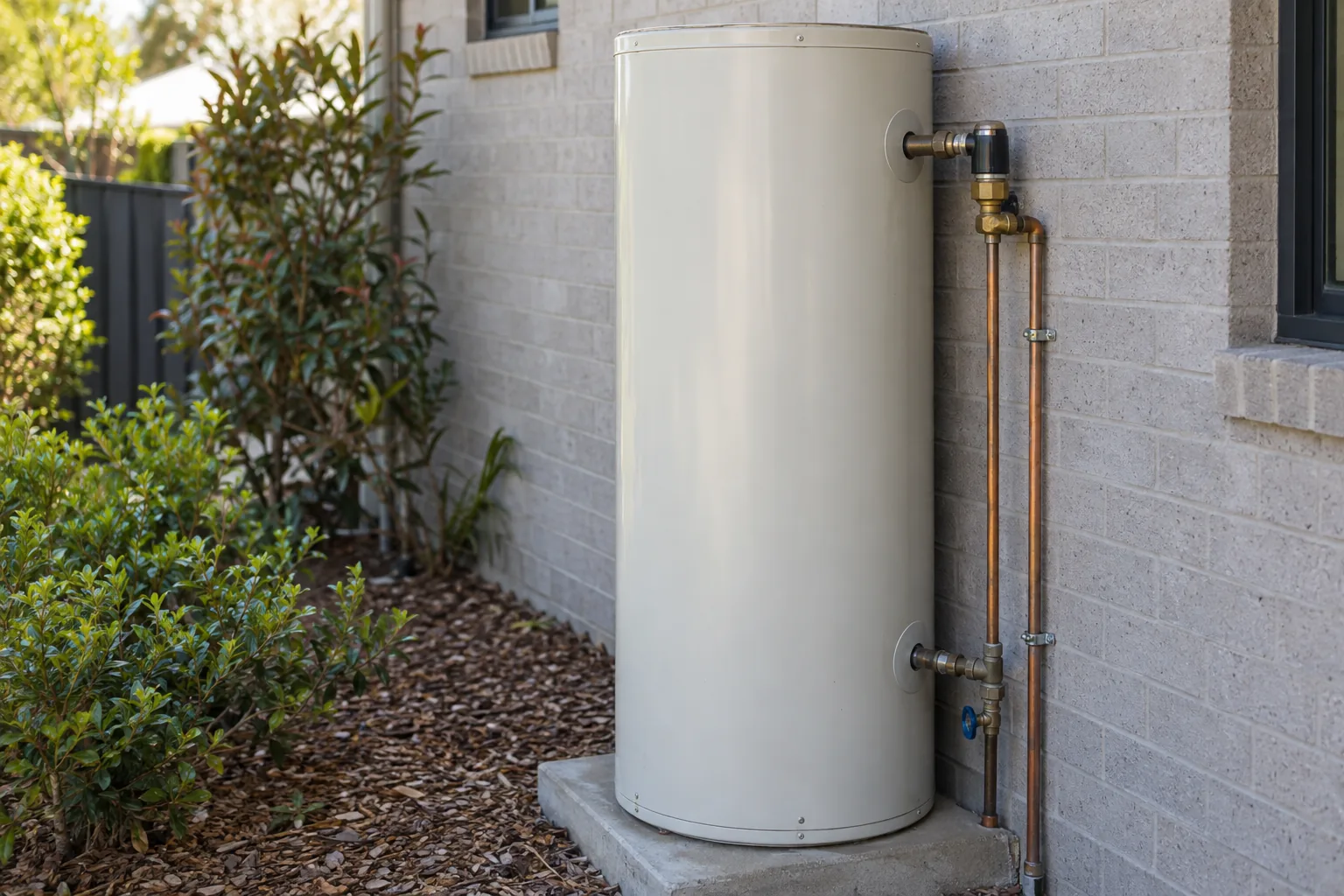
What has changed?
Describe whether the water stays cold, turns cold during use or changes temperature unexpectedly. Mention whether every tap is affected or the problem occurs at just one shower or mixer.
If you see water around the unit, describe where it is coming from without opening covers or touching internal components. Keep clear of hot water and wet electrical equipment.
- No hot water at any fixture.
- Hot water running out sooner than usual.
- Unexpected temperature changes.
- Persistent dripping or pooling near the system.
Repair or replace the system?
The fault, condition of the unit, parts availability and access help determine whether a repair is practical. Age alone does not establish what has failed. Ask for the fault and proposed work to be explained before choosing between repair and replacement.
A replacement also needs to suit the household's demand and the available space and services. Australia's YourHome guide explains the main system types and selection factors.
What information helps when you call?
Have the brand and model ready if the label is safely visible. Say whether it is a storage or continuous-flow system and whether it uses gas, electricity, solar or a heat pump. These details help identify the appropriate trade and scope; they do not require you to diagnose the fault.
Do not adjust gas controls or electrical components. If you smell gas, move to a safe location and contact the distributor emergency number on your bill.
Common questions
What affects a hot-water repair price?
The system, fault, parts, access and any associated plumbing, electrical or gas work affect the price. Ask about diagnosis costs and whether replacement is being quoted separately.